
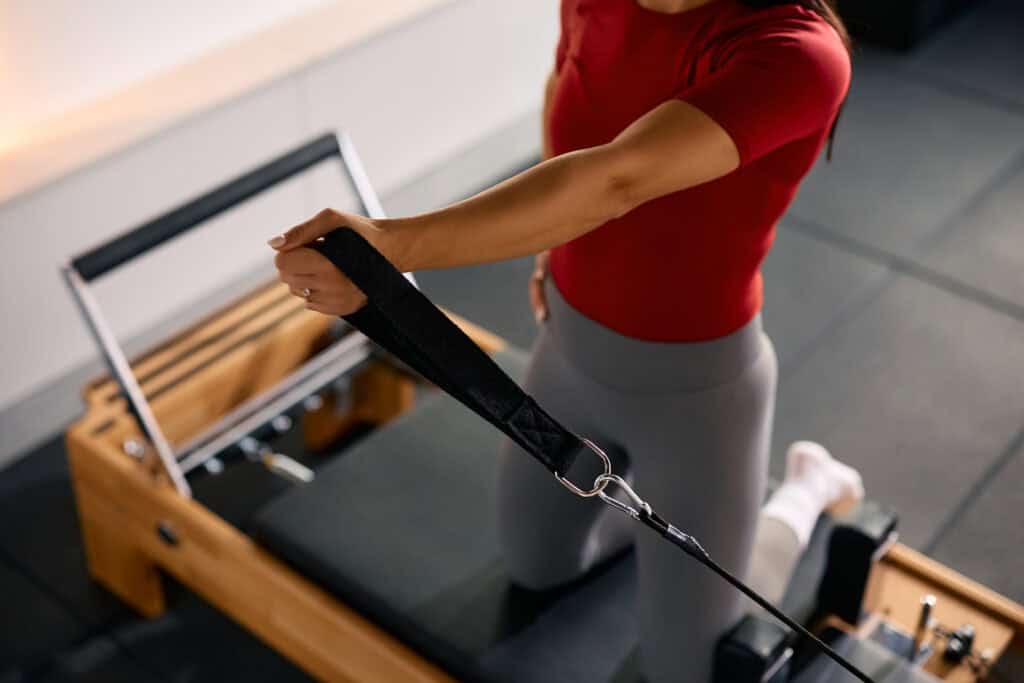
If you run a Pilates studio, the reformer is basically the heartbeat of the room. It gets used all day, by different bodies, different socks (or no socks), different levels of “gentle” when they move the carriage. And even if you have great equipment, little things build up fast. Dust in the tracks. Loose screws. A rope that starts to look a bit fuzzy. The kind of stuff nobody notices until it suddenly becomes a problem.
So this is a simple weekly checklist you can stick on a clipboard. Not a “deep service” schedule. Just the regular, boring, extremely useful habits that keep your reformers quiet, smooth, and safe.
One note before we start: always follow your specific model’s manual, especially for lubricants, spring specs, and any warranty requirements. When in doubt, check the manufacturer guidance or the maintenance info that comes with your unit.
What you need (keep it in a small studio kit)
- Microfiber cloths (a few, because one gets gross fast)
- Mild soap solution or a gentle, non abrasive cleaner
- Disinfectant appropriate for vinyl and finished surfaces
- Small vacuum or handheld vac with a brush attachment
- Hex keys and basic tools that match your reformer hardware
- A flashlight (seriously, you will use it)
- Paper towels, plus a “do not use” sign for any unit you take offline
If you’re outfitting a new space or replacing parts, it’s crucial to have an essential equipment checklist handy for your new Pilates studio. It’s also worth bookmarking a supplier you trust. Go Align Pilates (Align-Pilates) has model specific equipment and accessories. They also provide support resources so you can quickly match the right part to the right reformer without guessing. If you’re unsure about which reformer to choose for your studio, their guide on how to choose the right Pilates reformer for studio can be very helpful.
Remember, maintaining your reformers is key to ensuring smooth operations in your studio. Regular checks and maintenance will help avoid major issues down the line. You might also want to explore the different types of studio reformers available and consider the top Pilates reformers for studio success as potential options for your business.
Weekly checklist (do this per reformer)
1) Quick visual scan (2 minutes)
Walk around the reformer slowly. Look like you’re trying to spot problems, because you are.
- Frame: any new scuffs, cracks, bends, or wobble
- Feet: stable on the floor, no slipping, no torn rubber
- Carriage: sitting level, not rubbing, not drifting oddly
- Anything that looks “off” compared to last week, write it down
Studios get busy and this is where you catch the early signs before they turn into downtime.
2) Clean the rails and carriage path (5 to 10 minutes)
This is the quietness and smoothness section.
- Vacuum the rails and the area under the carriage if you can access it
- Wipe rails with a dry microfiber cloth first (get dust and grit off)
- Then wipe again lightly with a barely damp cloth if needed
- Make sure everything is dry before you run the carriage
Avoid overdoing liquids here. You want clean rails, not wet rails that collect more dust.
3) Wipe down high touch surfaces (5 minutes)
Think: hands, feet, faces.
- Footbar (top, underside, and adjustment points)
- Shoulder rests and headrest
- Carriage upholstery and standing platform
- Strap handles or loops
- Riser, pulleys, knobs, and gearbar area
Use a cleaner that is safe for vinyl and finished metal. Harsh chemicals can dry out upholstery or dull surfaces over time, and it shows.
To ensure your A8 Pro Pilates Reformer, C8 Pro Pilates Reformer, M8 Pro Pilates Reformer, or R8 Pro Pilates Reformer remains in optimal condition, following this checklist regularly is crucial. Additionally, using a reformer protection mat can help prevent damage during use.
4) Straps, ropes, and attachments check (5 minutes)
This is the “catch it before it snaps” part.
- Ropes: check for fraying, flattening, or thinning near pulleys and knots
- Straps: inspect stitching, especially where it folds or connects
- Clips/carabiners: open and close smoothly, no rust, no sharp edges
- Handles: secure, no cracking, no loose end caps
If you see real wear, don’t wait. Retire it and replace. Keep one or two spare ropes/straps in your back room if your studio runs classes daily.
5) Springs inspection (5 minutes)
Springs don’t just break out of nowhere, they usually give you warnings.
- Look for gaps, stretching, distortion, or corrosion
- Check spring ends and hooks for wear
- Make sure each spring is seated correctly on both ends
- Listen when clients use them. Squeaking or grinding is a clue
If a spring looks questionable, take that reformer out of service until you replace it. This is not a “maybe it’s fine” item.
6) Pulleys and rolling components (5 minutes)
Smooth movement matters for safety and for how the reformer feels in class. For instance, when using a high-quality reformer like the C8 S Pro Pilates Reformer, you can expect optimal performance.
- Spin pulleys by hand if accessible, they should rotate freely
- Check for wobble, grinding, or hair and lint wrapped around axles
- Make sure pulley ropes are tracking cleanly, not rubbing edges
A flashlight helps here. You’ll be surprised what you find stuck in there.
7) Bolts, screws, and adjustment points (5 minutes)
Things loosen over time. It’s normal.
- Check footbar locking mechanism and any pins
- Check shoulder rest bolts if your model allows easy inspection
- Check headrest adjustment hardware
- Check risers and pulley posts for tightness
You’re not trying to crank everything down like a mechanic. Just confirm nothing is backing out.
8) Carriage ride test (2 minutes)
After cleaning and checking, do a quick feel test.
- Run the carriage in and out slowly, then a bit faster
- Listen for new sounds
- Feel for bumps, rubbing, hesitation, or pulling to one side
If anything feels different than usual, note it and investigate now, not mid class.
9) Studio log it (1 minute)
This is the part most studios skip, then regret later.
Create a simple maintenance log with:
- Date
- Reformer number or name
- Checklist completed by
- Notes and parts needed
When you need to order replacements, that log saves time. If you’re sourcing Align-Pilates compatible parts for high-quality reformers, you can usually match what you need faster when you already know which unit and what failed. If you’re unsure about compatibility or specific parts needed, Go Align Pilates offers a comparison tool that can help narrow it down without the guessing game.
When weekly maintenance is not enough
If you notice any of these issues, stop using the reformer until it’s fixed:
- Spring damage, rust, or deformation
- Unstable frame or footbar movement
- Carriage wheels that grind or stick
- Frayed ropes or failing strap stitching
- Any “clunk” that you can feel, not just hear
Weekly maintenance is supposed to prevent emergencies, but it also gives you permission to take something offline early, before it becomes an injury risk.
If you want, print this checklist and keep it with your front desk binder. And if you’re building a better maintenance routine or replacing worn parts, it’s worth browsing the reformer accessories and support resources at goalignpilates.com. For instance, their silent reformer foot strap could be a great addition to your maintenance routine. This way, you can keep everything studio ready without delays.