
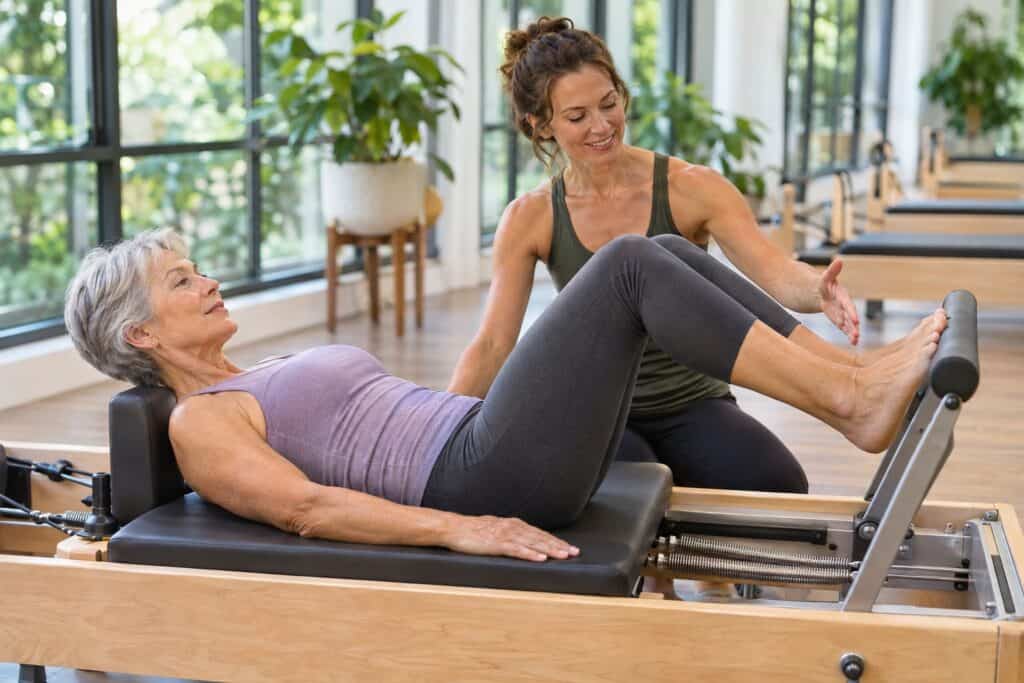
More adults over 60 are discovering what Pilates instructors have known for decades: the method is one of the safest, most effective ways to stay strong, steady and independent as you age. Pilates for seniors works especially well on a reformer, where springs, straps and a moving carriage let you build strength without pounding your joints or getting down onto a hard floor.
This guide is for both sides of the studio. If you’re an older adult (or the adult child of one), you’ll learn why the reformer suits an ageing body and five safe exercises to start with. If you own or run a studio, you’ll find the equipment tweaks and programming ideas that make your space genuinely welcoming to the 60+ crowd, one of the most loyal client groups you can attract.
Always check with your doctor or physiotherapist before starting a new exercise program, especially if you have osteoporosis, a joint replacement, heart concerns or balance issues.
Why Pilates for Seniors Works So Well
Ageing brings a predictable set of changes: we gradually lose muscle mass, bone density, flexibility and the quick balance reactions that keep us upright when we trip. Pilates targets all four at once, at an intensity you can control.
Strength without strain
Pilates builds the deep stabilizing muscles around the spine, hips and shoulders, the muscles that make everyday movements like standing up from a chair, carrying groceries or climbing stairs feel easier. Because every exercise is slow and controlled, there’s no jumping, no heavy barbells and very little impact.
Better balance and fewer falls
Falls are one of the biggest threats to independence later in life; the Public Health Agency of Canada estimates that 20 to 30 percent of Canadian seniors fall each year. Pilates trains the core, hips and ankles to work together and sharpens body awareness, two things that help you catch yourself before a stumble becomes a fall.
Mobility for everyday life
Gentle spinal movement, hip mobility work and controlled stretching keep joints moving through a fuller range. Many older clients notice they can turn to check a blind spot, reach a high shelf or tie their shoes more comfortably after a few months of regular practice.
Reformer Benefits for Seniors: Low Impact, Adjustable Resistance
Mat Pilates is a great option, but for many seniors the reformer is the better place to start. Here’s why.
You don’t have to get down to the floor
Getting up and down from a mat is a real barrier for people with stiff knees, hip replacements or balance concerns. A reformer carriage sits at a raised height, so you can sit down onto it, lie back with support and get off again without kneeling on the floor.
Springs make resistance precise
Reformer springs let an instructor dial resistance up or down in small steps. Light springs can make an exercise easier by offering support (for example, helping you through a range of motion), while heavier springs add challenge as you get stronger. That flexibility is hard to match with body-weight exercise alone.
Support for the spine and head
Lying on a padded carriage with an adjustable headrest supports the neck and back during exercises that would otherwise be uncomfortable. For clients managing back discomfort, our guide on Pilates for back pain explains how reformer work can help.
Closed-chain, joint-friendly movement
Many reformer exercises keep your feet or hands in contact with the footbar or straps. This “closed-chain” style of movement is generally easier on the knees and hips than free-swinging movements, and it builds strength in positions that mirror real life, like pushing up from a seat.
5 Safe Reformer Exercises for Seniors (60+)
These five exercises form a well-rounded starter session. Move slowly, breathe out on the effort and stop anything that causes sharp pain or dizziness. If you’re brand new, our guide to reformer Pilates for beginners walks through the machine’s parts and basic set-up.
1. Footwork
What it builds: leg strength for walking, stairs and getting out of chairs.
Lie on your back on the carriage with the headrest up and the balls of your feet on the footbar, heels lifted slightly. Press the carriage out until your legs are long (without locking your knees), then return with control. Do 8 to 10 repetitions, then repeat with heels on the bar. Start on light-to-moderate springs; the goal is smooth control, not heavy pushing.
2. Bridging
What it builds: glutes, hamstrings and lower-back support.
From the footwork position with your heels on the footbar, exhale and lift your hips a few inches off the carriage, keeping your weight even through both feet. Hold for a breath, then lower slowly. Keep the lift small at first. Clients with osteoporosis should keep the spine neutral rather than peeling up one vertebra at a time, and follow their healthcare provider’s guidance.
3. Arm Springs (Seated or Lying)
What it builds: shoulder and upper-back strength for posture and reaching.
Holding the straps with light springs, press your arms down toward your hips, then let them return slowly. Seniors who find lying down uncomfortable can sit tall on the carriage, facing the straps, and perform rows and arm presses instead. Keep your shoulders away from your ears and your movements smooth.
4. Seated Cat-Cow
What it builds: spinal mobility and posture awareness.
Sit on the carriage (or on a sitting box placed on top) with feet planted and hands resting on your thighs or the footbar. Exhale and gently round your back, dropping your chin; inhale and lift your chest, lengthening the spine. Keep the movement small and comfortable. People with osteoporosis should skip deep rounding and focus on the lengthening “cow” portion.
5. Standing Balance at the Footbar
What it builds: ankle strength, hip stability and fall-prevention skills.
Stand on the floor beside the reformer, holding the footbar lightly for support. Rise onto your toes and lower slowly for 8 to 10 reps, then try shifting your weight onto one leg for a few seconds at a time. As balance improves, reduce your grip to fingertips. A stable reformer frame makes a reassuring support, as long as the carriage is locked or loaded with springs so it can’t move.
Finish every session with a short cool-down. Our reformer warm-up and cool-down routines are easy to adapt for older clients.
Equipment Modifications for Senior-Friendly Studios
The right equipment set-up can make the difference between a nervous first visit and a client who comes back for years.
Choose the right reformer height
Lower reformers are harder to get on and off. For a senior-focused class, a raised or elevated reformer reduces the distance clients need to lower themselves and makes it easier for instructors to provide hands-on cues without kneeling. If you’re comparing machines, our studio owner’s guide to choosing commercial Pilates equipment covers frame heights, materials and durability.
Add supportive accessories
- Sitting box: raises seated exercises to a more comfortable height and adds stability.
- Padded platform extension: creates a larger, steadier surface for getting on and off.
- Extra cushioning: small pads or folded towels under the head, hips or knees.
- Soft-grip handles and loops: easier on arthritic hands than thin rope straps.
Use lighter spring options
Make sure your reformers offer light springs and fine increments. Seniors often progress best with small, steady jumps in resistance.
How Studio Owners Can Attract an Older Demographic
Adults over 60 tend to have flexible schedules, value expert guidance and stay loyal when they feel safe and welcome. Here’s how to earn their business.
Create dedicated classes
Launch a clearly named program such as “Reformer for Active Agers” or “Strength and Balance 60+.” Keep classes small (four to six clients) so instructors can watch every rep, and schedule them mid-morning or early afternoon when studios are typically quieter.
Invest in instructor education
Train your team on modifications for osteoporosis, joint replacements, arthritis and high blood pressure. A short health intake form for every new client shows professionalism and helps instructors plan safely.
Build referral partnerships
Physiotherapists, family doctors, retirement communities and community centres are natural referral sources. Offer an introductory package for their patients or residents, and keep in touch with progress reports when clients give permission.
Market to the real motivations
Older clients rarely want “a stronger core” for its own sake. They want to keep travelling, play with grandchildren, golf, garden and live independently. Use those outcomes in your messaging and use photos of real clients your target age.
Make the first visit easy
Offer a free or low-cost orientation where new clients can try the reformer, ask questions and see how it adjusts. Removing that first-visit anxiety is one of the most effective ways to grow a senior program.
Frequently Asked Questions
Is Pilates safe for seniors?
Yes. Pilates is low impact and highly adaptable, which makes it suitable for most older adults. Get clearance from your doctor first, especially if you have osteoporosis, recent surgery or heart concerns, and work with a qualified instructor.
Is reformer or mat Pilates better for seniors?
Both help, but many seniors find the reformer easier to start with because it avoids getting down to the floor, supports the spine and allows precise resistance adjustments. Mat work is a good option at home once you know the basics.
How often should seniors do Pilates?
Two to three sessions per week is a good target for building strength and balance. Even one session a week, combined with daily walking, can make a noticeable difference.
Can you start Pilates at 70 or 80?
Absolutely. Many people start in their 70s and 80s. Begin with lighter springs, shorter sessions and an instructor who understands age-related modifications.
What exercises should seniors with osteoporosis avoid?
People with osteoporosis are generally advised to avoid loaded forward bending (like a full roll-up) and deep twisting of the spine. Focus on neutral-spine strength, back extension and balance work, and follow your healthcare provider’s advice.
Conclusion: Pilates for Seniors Starts with the Right Equipment
Pilates for seniors is one of the best investments an older adult can make in their long-term strength, balance and independence, and the reformer makes it accessible even for people who can’t comfortably exercise on the floor. For studio owners, a thoughtfully equipped senior program is a chance to serve a loyal, growing community.
Whether you’re setting up a home reformer for yourself or outfitting a studio for active agers, Go Align Pilates can help you choose equipment that’s safe, adjustable and built to last. Contact our team to talk through the right reformer for your needs.