
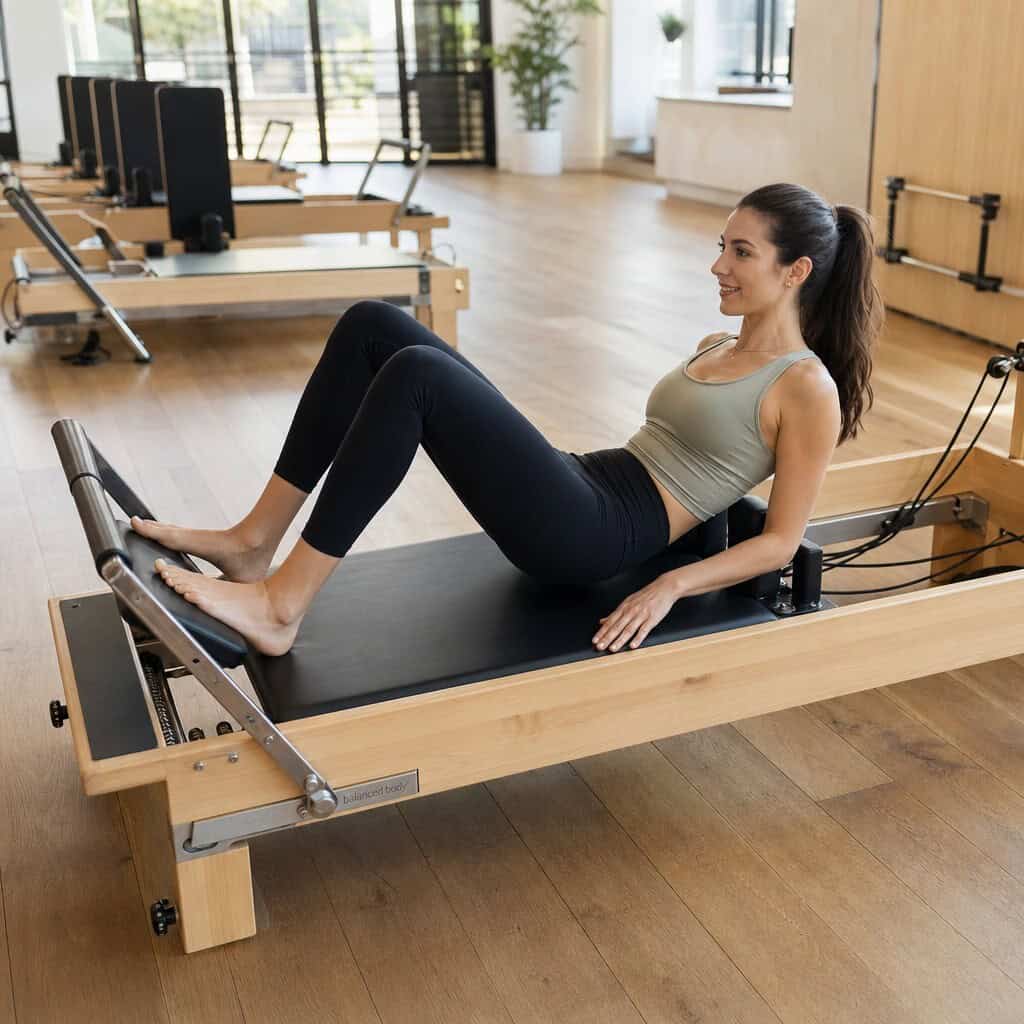
Walking into a Pilates studio for the first time can feel intimidating. The reformer — with its sliding carriage, springs, and straps — looks more like a piece of gym engineering than a wellness tool. But reformer Pilates for beginners is far more approachable than it appears, and it’s one of the most effective ways to build strength, improve flexibility, and transform your body mechanics from day one.
Here’s everything you need to know before your first reformer session, whether you’re heading to a studio or considering a home setup.
What Is Reformer Pilates?
Reformer Pilates is a form of exercise performed on a specialized machine called a reformer. The machine consists of a flat platform (the carriage) that slides back and forth on rails within a frame. Springs of varying resistance attach to the carriage, and a series of ropes, pulleys, and a footbar provide anchor points for exercises.
Joseph Pilates invented the reformer in the early 20th century, and the core principle hasn’t changed: use controlled, spring-loaded resistance to strengthen muscles while improving alignment, balance, and body awareness. Unlike weight machines at a gym, the reformer challenges your stabilizing muscles through every movement, making each exercise a full-body effort even when targeting a specific muscle group.
How It Differs from Mat Pilates
Mat Pilates uses your body weight as resistance. Reformer Pilates adds adjustable spring tension, which can make exercises either easier or harder depending on the setup. For beginners, this is actually an advantage — lighter springs can assist you through movements that would be difficult on a mat, while heavier springs add challenge as you progress.
The reformer also expands the exercise library significantly. Movements like footwork, long stretch, and elephant aren’t possible on a mat, giving you more variety and targeting muscles from angles that bodyweight alone can’t reach.
Benefits of Reformer Pilates for Beginners
Low-Impact, Joint-Friendly Exercise
The sliding carriage eliminates ground impact, making reformer Pilates ideal for beginners with joint sensitivities, past injuries, or anyone who finds high-impact exercise uncomfortable. You get a challenging workout without the stress on knees, hips, or ankles that running or jumping creates.
Core Strength from Day One
Every reformer exercise requires core engagement to stabilize your body on the moving carriage. Even basic footwork and arm exercises recruit your deep abdominal muscles, building a foundation of core strength that supports everything else you do — from lifting groceries to improving your posture at a desk.
Improved Posture and Body Awareness
The reformer provides constant feedback. If your alignment is off, you’ll feel it immediately through the movement of the carriage. This built-in biofeedback helps beginners develop body awareness faster than most other forms of exercise.
Scalable Difficulty
Springs come in different tensions (typically colour-coded), allowing your instructor to customize resistance for your current fitness level. As you get stronger, simply changing a spring transforms a familiar exercise into a new challenge. This scalability means a single reformer setup can serve you from your first session through years of advanced practice.
Full-Body Conditioning
A well-structured reformer class works your entire body in a single session. You’ll move through exercises targeting legs, glutes, core, arms, and back — often within the same movement. The health benefits of regular reformer workouts include improved muscle tone, better flexibility, reduced back pain, and increased energy levels.
What to Expect in Your First Class
Before You Arrive
Wear fitted, comfortable clothing — loose fabric can get caught in the springs or pulleys. Grip socks (with rubberized dots on the soles) are required at most studios and help prevent your feet from slipping on the footbar and carriage. Arrive 10-15 minutes early so your instructor can walk you through the machine.
During Class
A beginner reformer class typically lasts 50-55 minutes and follows a structured flow:
- Warm-up (5-10 minutes): Gentle footwork on the reformer to warm up your legs and establish your connection to the machine
- Core series (10-15 minutes): Supine exercises targeting abdominals, often including the hundred, coordination, and short spine
- Standing and kneeling work (10-15 minutes): Exercises using the footbar and platform for balance, leg strength, and hip mobility
- Arms and upper body (10 minutes): Strap-based exercises for shoulders, chest, and back
- Cool-down and stretch (5-10 minutes): Gentle stretches using the reformer’s straps and carriage for assisted flexibility work
What You’ll Feel Afterward
Expect to feel muscles you didn’t know you had. Reformer Pilates targets deep stabilizers that most other workouts miss, so mild soreness in your core, inner thighs, and glutes is completely normal after your first session. This typically fades within a day or two as your body adapts.
At-Home vs Studio Reformer Pilates
Studio Classes: Best for Beginners
If you’re new to reformer Pilates, starting at a studio with a certified instructor is the smartest move. An instructor can correct your form in real time, adjust spring settings for your body, and ensure you’re performing exercises safely. Most studios offer introductory packages (3-5 classes at a reduced rate) specifically designed for newcomers.
At-Home Reformers: A Growing Option
Once you’ve built a foundation (typically after 10-20 studio sessions), many people add a home reformer for convenience and cost savings over time. Home reformers range from compact, foldable models to full-size commercial-grade machines.
If you’re considering a home setup, our reformer buying guide for home use covers everything from space requirements to spring systems and price comparisons. Key factors to evaluate include:
- Space: A standard reformer needs roughly 4′ × 8′ of floor space plus room to move around it
- Quality: Avoid ultra-budget reformers under $500 — they often have unstable carriages and weak springs that compromise both safety and exercise quality
- Spring system: Look for machines with at least 4-5 springs in varying tensions
- Weight capacity: Ensure the reformer supports at least 250 lbs for stability
Essential Equipment for Beginners
What You Need for Studio Classes
- Grip socks: $12-20 per pair — non-negotiable at most studios
- Fitted activewear: Leggings and a fitted top work best
- Water bottle: You’ll work harder than you expect
What You Need for Home Practice
- Reformer: $1,500-$5,000+ depending on quality and features
- Mat: Place under the reformer to protect your floor and reduce noise
- Box: Most reformers include a sitting box; if not, purchase separately ($50-100)
- Online instruction: Follow-along reformer classes from certified instructors ($15-30/month for subscription platforms)
Proper reformer maintenance is also essential if you’re investing in a home machine — keeping springs clean and the carriage lubricated ensures smooth, safe movement and extends the life of your equipment.
Frequently Asked Questions
Is reformer Pilates good for complete beginners?
Yes. Reformer Pilates is excellent for beginners because the springs can be adjusted to assist or resist movement, allowing exercises to be modified for any fitness level. A qualified instructor will tailor the class to your abilities.
How often should beginners do reformer Pilates?
Start with two sessions per week. This gives your body time to recover between sessions while building strength and familiarity with the movements. After 4-6 weeks, you can increase to three sessions if desired.
Can I do reformer Pilates if I have back pain?
In many cases, yes — reformer Pilates is often recommended by physiotherapists for back pain management because it strengthens core muscles that support the spine. However, consult your healthcare provider before starting, and always inform your instructor about any existing conditions.
How long before I see results from reformer Pilates?
Most beginners notice improved posture and core awareness within 2-3 weeks. Visible changes in muscle tone and flexibility typically appear after 6-8 weeks of consistent practice (2-3 sessions per week).
What’s the difference between a reformer and a Cadillac/tower?
The reformer has a sliding carriage with springs, while the Cadillac (or tower) is a fixed frame with bars and springs attached overhead and at the sides. Both are Pilates apparatus, but the reformer is more common in group classes and home use. The Cadillac is typically used in private sessions for rehabilitation and advanced work.
Start Your Reformer Pilates Journey
Reformer Pilates is one of the best investments you can make in your long-term fitness and well-being. The learning curve is gentler than it looks, the benefits are real from your first session, and the practice grows with you as your strength and skills improve.
Ready to try your first class? Find a certified instructor at a Pilates studio near you, or explore our range of studio and home reformers to start building your practice on your own terms.