
By Lora Ksieniewicz
Whether you’re swinging a tennis racquet, golf club, baseball bat, or pickleball paddle, your body must twist, turn, and move with a lot of control. These sports demand strength, balance, and smooth movement, and all of this starts from a strong center. After many years of training professional athletes, college players, and everyday movers, I’ve seen how adding Pilates for rotational athletes can be a true game changer for anyone in a swing or rotational sport. Pilates for rotational athletes helps improve performance and also reduces strain on the body, which means fewer injuries over time.
One big reason Pilates for rotational athletes works so well is because it focuses on eccentric strength training. This means your muscles get stronger while they slowly lengthen under control. Think of gently lowering a weight instead of just lifting it up. These controlled movements help build long, lean muscles and make your body more stable and more resilient.
Many Pilates for rotational athletes exercises are designed to support twisting and swinging movements. These exercises target your deep core muscles, helping you build powerful core strength that helps you rotate safely and with more force. This is why Pilates is one of the smartest tools athletes can use to move better, protect their joints, and play at a higher level.
Why Eccentric Training in Pilates Helps Rotational Athletes
Most regular workout programs, especially those done in the weight room, focus mainly on concentric movements. This means the muscles shorten to make the body lift or push something. Concentric training is great for building power, but if athletes rely on it too much, their muscles can become unbalanced. They may start depending only on their big muscles for both strength and stability. When this happens, their joints take on too much stress. Over time, this can lead to soreness, joint friction, tightness, and even injuries like strains and tears. It can also reduce how far the body can move, especially when muscles get bigger and start pulling unevenly on the joints.
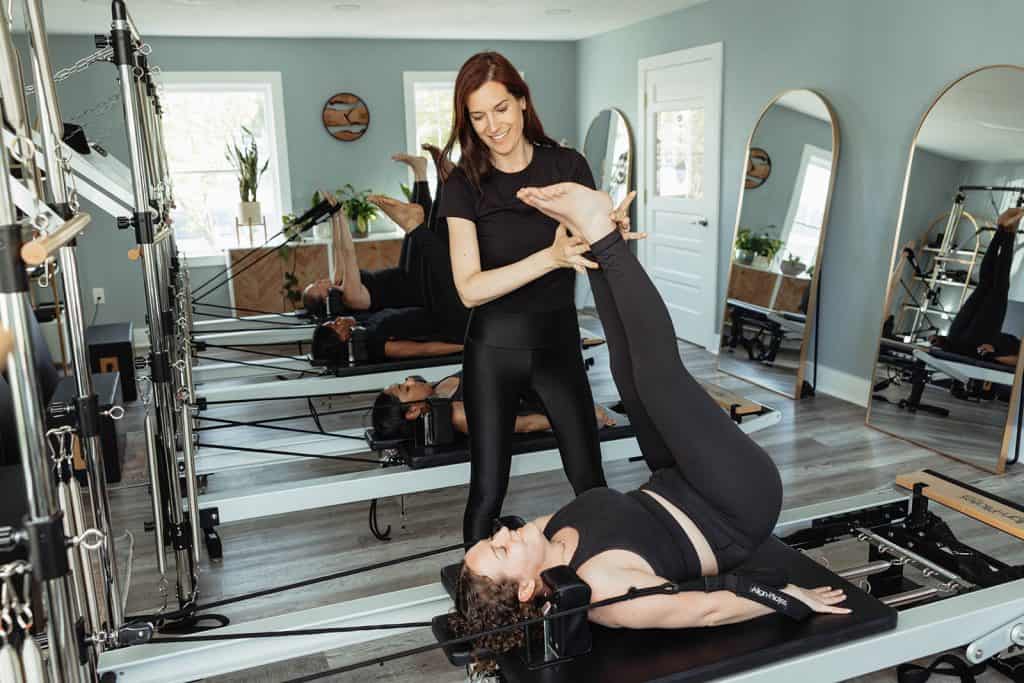
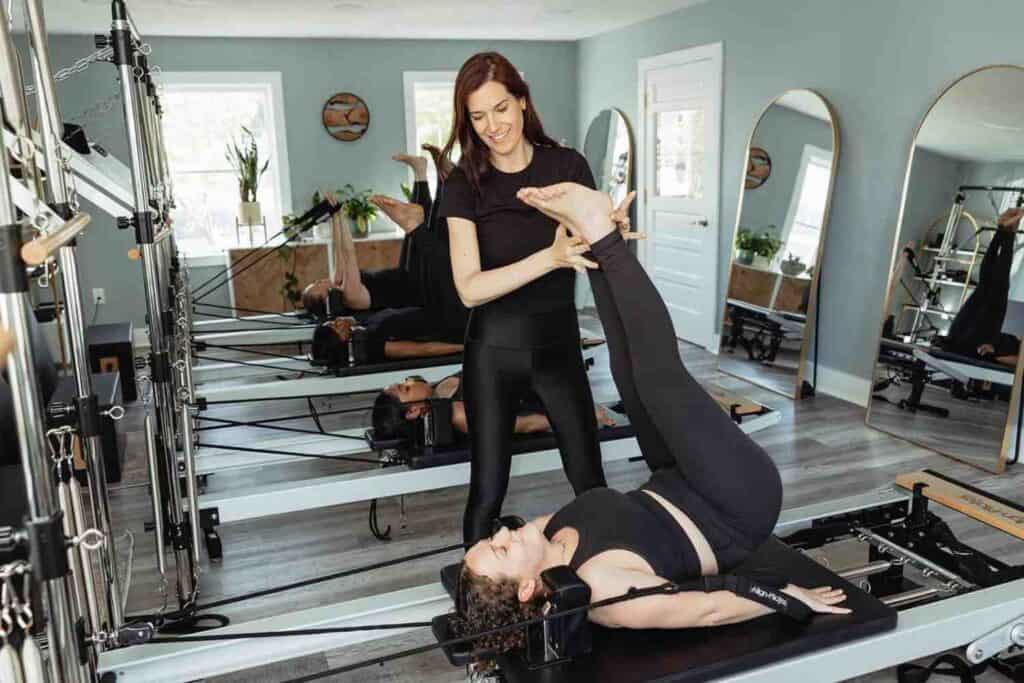
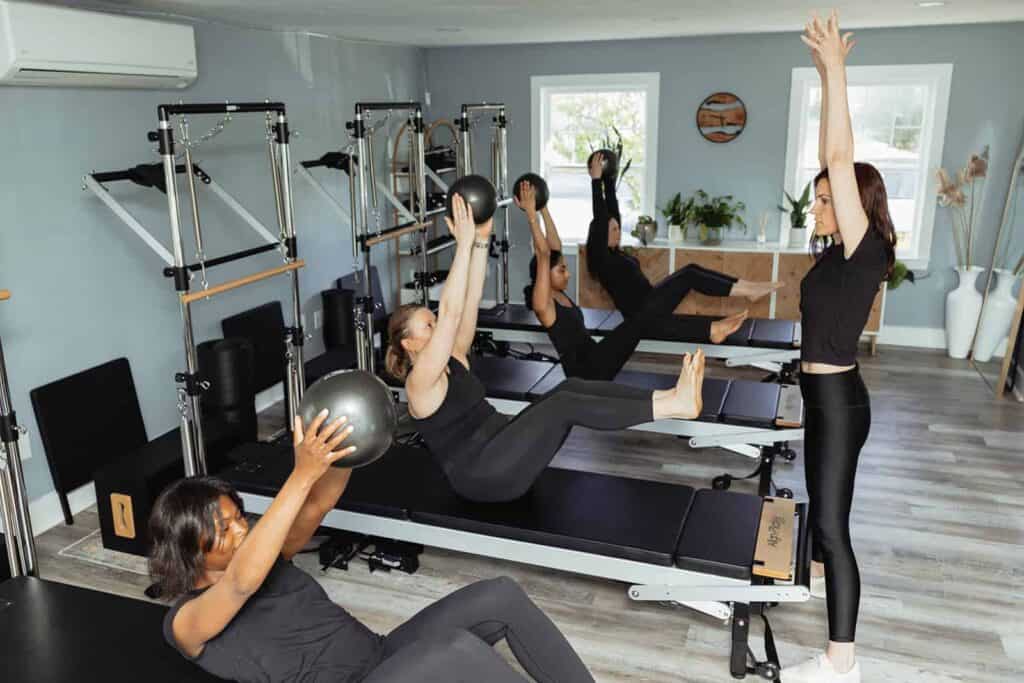
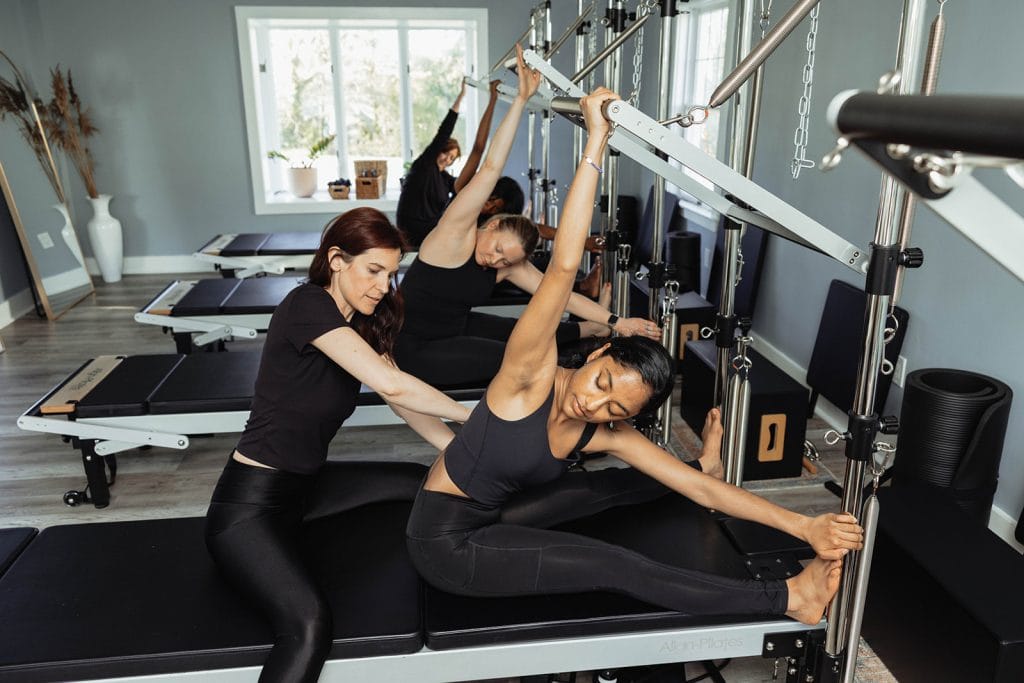
Pilates for rotational athletes helps fix these imbalances by training the body in a different and smarter way. On Pilates equipment like the Reformer or Tower, we use springs that give resistance in both directions. When an athlete pushes the carriage or bar away, they work with eccentric loading, which means the muscles get stronger while slowly lengthening. This type of movement is very different from a normal weight room exercise.
Eccentric work helps the body in many important ways. It builds more muscle fibers, activates more motor neurons (which help with balance and control), and strengthens the body through the full range of motion. It is especially helpful at the end of a movement, which is where most injuries happen. Eccentric loading is also the only type of training known to activate fibroblasts, the cells that repair tendons, ligaments, and fascia. This makes the body’s connective tissue stronger and more flexible, which protects athletes from injury and keeps their joints steady during fast or twisting movements. It also helps create long, lean muscle fibers instead of bulky ones.
And that’s only half the movement. After pushing the carriage away, the athlete must also bring it back in. Instead of letting the springs pull them back quickly, the goal is to control the return. This slow, steady movement wakes up smaller support muscles (called synergists) that usually don’t get much attention in regular workouts. These muscles help keep the body stable during big actions like swinging, twisting, and rotating, which is why Pilates for rotational athletes is so helpful for athletes in rotational sports.
How the Pilates Chair Helps Rotational Athletes?
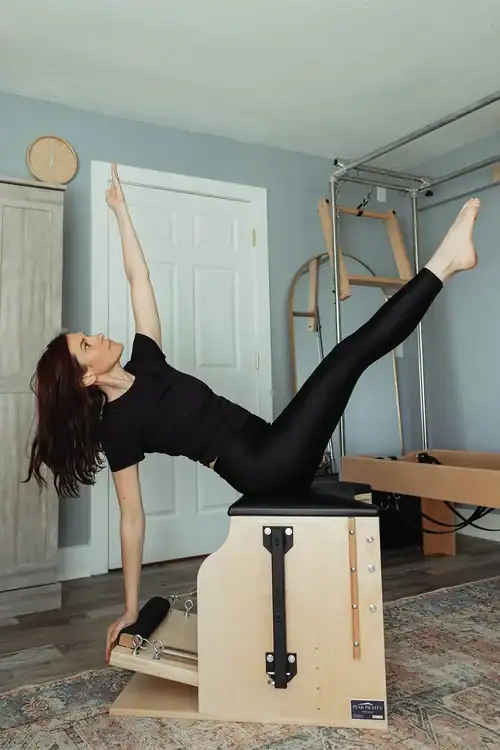
The Pilates Chair adds another dimension: it teaches athletes how to initiate movement from their core, which we often call the “powerhouse” so their arms and legs can move more efficiently and precisely. This deep connection between the center of the body and the limbs is essential for fluid, powerful movement in any sport that requires rotation or control.
I’ve seen firsthand the difference this makes. One young baseball player came to me after a string of minor injuries, nothing catastrophic, but enough to chip away at his performance. Within six months of incorporating Pilates for rotational athletes into his training, not only was his swing more fluid and powerful, but his pain disappeared.
More significantly, the Amherst College men’s soccer team, a championship-winning program, saw a measurable decrease in injury rates after we integrated eccentric strength and pliability training into their off-season conditioning.
These benefits aren’t only for elite athletes. They’re actually just as important for people who play sports for fun. Many hobby players, whether they enjoy tennis, golf, padel, or pickleball — still want to move well, play better, and avoid getting hurt. The truth is, the needs of rotational sports don’t change just because you’re not a pro. You still need precision, balance, good rotation, and control. Pilates for rotational athletes helps with all of these while also caring for your joints and supporting physical activity and your health for the long run.
In a time when many young athletes are getting repetitive-use injuries from playing the same sport year-round, Pilates for rotational athletes offers something different. It gives athletes of all ages a smart and safe way to train their whole body. Because Pilates focuses on balanced movement, strong core control, and careful technique, it supports injury prevention and boosts athletic performance at the same time. It’s a simple, sustainable way to stay strong, avoid pain, and enjoy your favorite sports longer.
Whether you’re swinging for fun or for a title, it might just be your secret weapon.
About the Author
Lora Ksieniewicz is the founder and owner of Aligned Pilates, where she runs two welcoming studios that bring the power of Classical Pilates to Martha’s Vineyard and Florence, Massachusetts. Her studios are small and personal, giving each student the attention they need to move well and feel strong, not just work out.
With a background in Yoga and Kinesiology, Lora has created spaces where people can build physical strength, improve mental focus, and find balance in their everyday lives. Her studios use Align-Pilates C8-Pro Reformers, offering both group reformer classes and private sessions for students who want a calm, focused environment.
Lora also owns two “Yoga on the Vine” studios, sharing her full approach to wellness. Through her teaching and writing, she explains how Pilates emphasizes control, alignment, and smart movement, all of which help athletes move better with reduced injury risk. She believes that Classical Pilates is a strong foundation for sports performance, safer training, and a healthier life overall.